By clicking “Accept All Cookies”, you agree to the storing of cookies on your device to enhance site navigation, analyze site usage, and assist in our marketing efforts. View our Privacy Policy for more information.
Ground Up Series – Week 2: Shin Muscles & Ankle Dorsiflexion
Week 2 of our Ground Up series shifts focus to the shin muscles,specifically the tibialis anterior, and their role in ankle dorsiflexion. These muscles are essential for foot control, balance, and smooth movement duringwalking, running, squatting, and stepping. This week’s focus helps build strength, improve tissue quality, and restore balance between the front and back of the lower leg.
By
January 13, 2026
Related

Ground Up Series – Week 2
Last week we started from the ground up by focusing on the calves and ankle stiffness. This week, we shift attention to the shin muscles,primarily the tibialis anterior.
These muscles help control how your foot lowers to the ground, clear your foot when you walk or run, and stabilize your ankle during squats, lunges, andstep-downs. When the shins are weak or restricted, the calves tend to overwork,ankle range becomes limited, and stress often shows up in the knees or feet.
The goal this week is better control, balance, and durability at the ankle.
What We’re Working on in Class
In class, we are building ankle dorsiflexion strength and control, along with improving tissue quality on the front and outside of the lower leg. You may notice this showing up during movements that require keeping the heels down or controlling the lowering portion of a rep.
This work supports smoother movement patterns and reduces unnecessary strain higher up the chain.
At Home Homework
Complete this 3 to 4 times this week. Total time is about 10 to 15 minutes.
You can view the instructional videos HERE!
1. Tibialis Anterior Soft Tissue Mobilization – Lacrosse Ball or FoamRoller
You can use either tool depending on how much pressure you want.
Lacrosse Ball (Dialed Back Version):
In a seated position, apply the lacrosse ball by hand to the muscle just outside the shin bone. Control both pressure and position.
Important note: The video version is a scaled-back option. In class, we performed a more aggressive version by placing the lacrosse ball on the ground and loading it with body weight. At home, start with the seated version unless you already know your legs tolerate deeper pressure well.
Foam Roller Option:
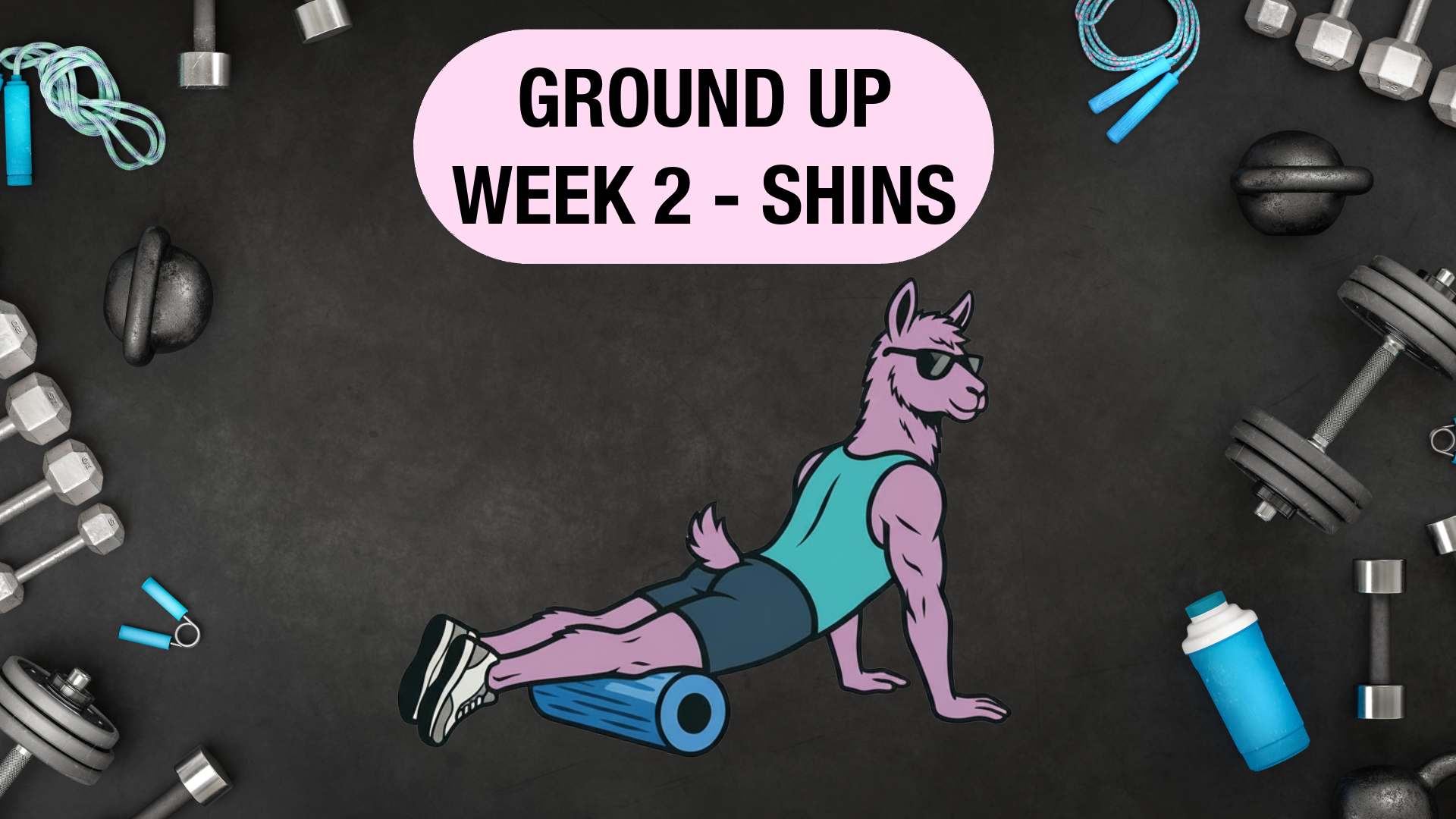
Start on all fours with the foam roller under your shin. Slowly roll up and down the muscle just outside the shin bone.
Recommendation:
• 1 to 2 minutes per side
• Slow, controlled passes
• Avoid rolling directly on the bone
2. Isometric Ankle Dorsiflexion – Hand Resistance
Set up seated with one leg crossed over the other. Keep the working foot in a neutral position. Use your hand to push downward against thefoot while resisting so the foot does not move.
You should feel the muscles in the front of the shin and top of the footworking without motion.
Recommendation:
• 3 to 5 reps per side
• Hold each rep for 10 to 20 seconds
• Moderate effort, not maximal
3. Plantar Flexion With Inversion Twistability Stretch
Start seated with one knee bent and resting to the side.Stabilize the lower leg with one hand. With the other hand, twist the footinward and gently pull it upward while keeping the lower leg still.
This targets the outside of the ankle and supports healthier ankle mechanics.
Recommendation:
• 6 to 10 slow reps per side
• Brief pause at end range
• Smooth and controlled throughout
4. Ankle Dorsiflexion Strength – Standing or Seated
Standing Ankle Dorsiflexion (More Challenging):
Stand with your back and hips against the wall. Walk your feet slightly forward. Keep heels down and knees straight as you lift the toes and slowlyl ower them.
Seated Ankle Dorsiflexion (Less Challenging):
Sit with your heel supported on an elevated surface and your foot hanging freely. Lower the toes toward the floor, then lift them up toward the ceiling with control.
Recommendation:
• 2 to 3 sets per side
• 10 to 15 reps
• Slow tempo both directions
Why This Matters
Strong, responsive shin muscles allow the ankle to move through range without compensation. That means better squat depth, smoother walking and running mechanics, and less overload on the calves, knees, andfeet.
Your at-home work creates the base. Class is where we layer load and coordination on top of it.
Stay consistent, keep it controlled, and build from the ground up.

.png)
.png)